Welcome to my page!
Andrew Chao
rewchao@umich.edu
I'm a robotics student at the University of Michigan, I am from the San Francisco Bay Area.
I like to build stuff, run distance, bike, and play games. Right now I am a member of Michigan Triathlon,
capitan of MVFT, and working in the Jensen Lab.

Check out my stuff below!!! :)
I'm currently working on.....
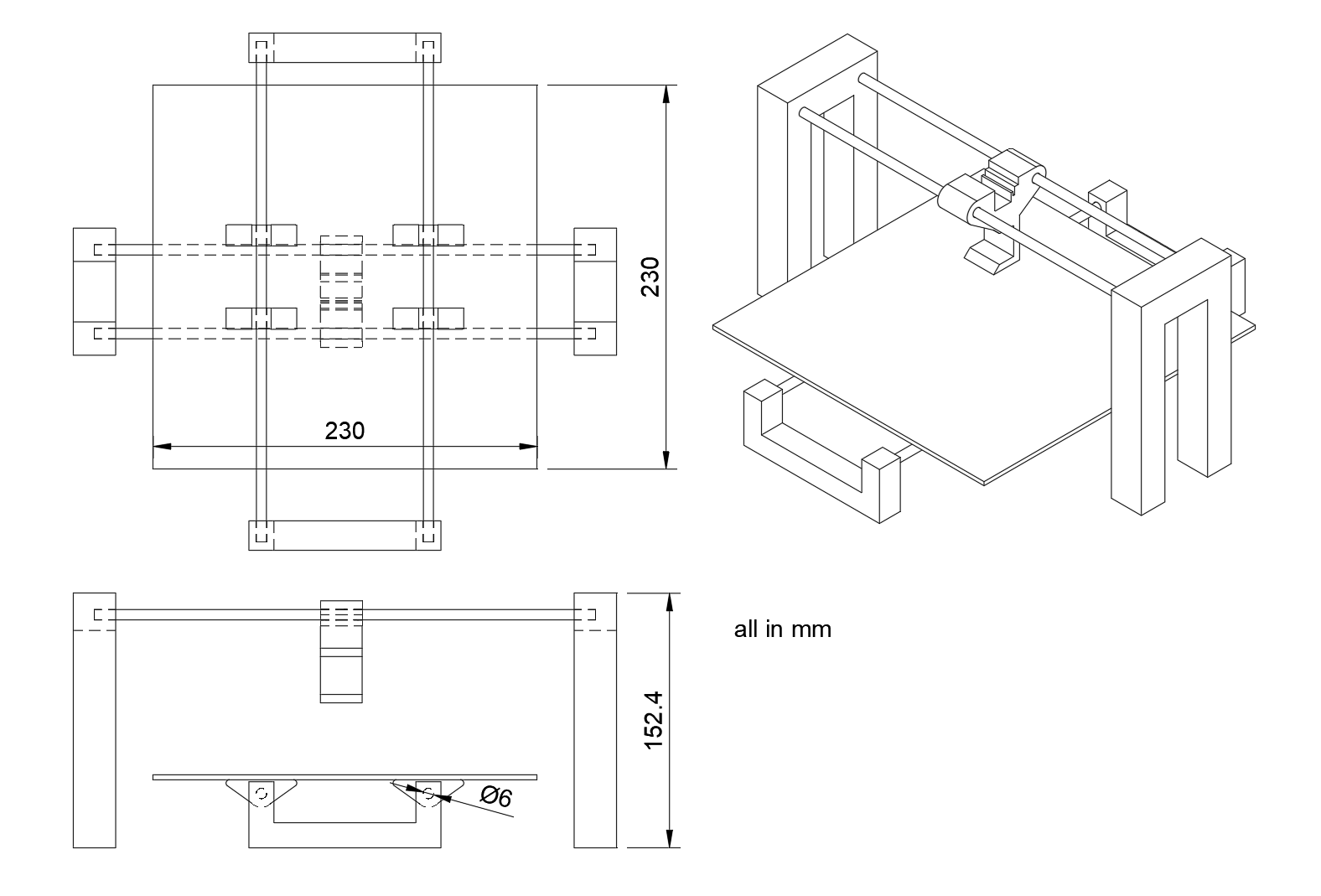
A Multicolor 2D pen plotter
230mm x 230mm

I've been wanting to make a 2D plotter for a while now,
I recently saw a youtube video which inspired me to try
to make a multicolored pen plotter. The idea is having multiple
pen 'heads' which would allow it to change what color it is
currently drawing with by simply moving a servo on a linear rail.

<-- on the right is a initial CAD I made in fusion, not my finest work
but got it all done in about 30 minutes, which for that amount of time
I don't think is all too shabby.

I need to design the multiple print head system, I want it to be easly
swappable and expandable so I can quickly swap what colors I want
to use.

I originally was thinking about using one of those cheap push/pull
solenoids to move the pen up/down, but I've heard that they aren't 
really designed to be held constantly in a high state since they draw
a good amount of current and can get pretty toasty, so for now I'll 
just use sg90s, maybe I'll test a solenoid to see since they would fit in
a lot smaller form factor which would be nice.
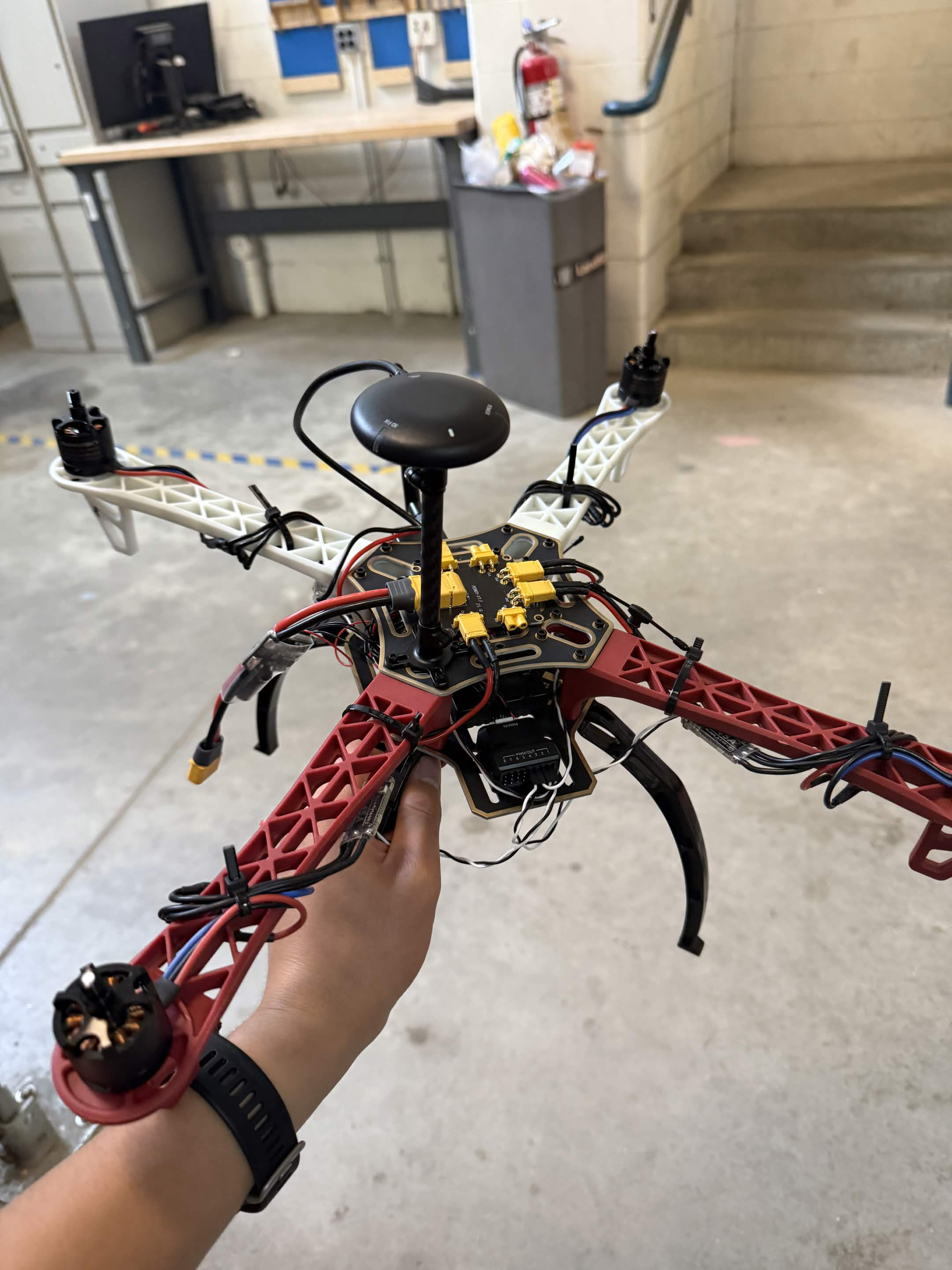
Heavy Lift Drone
850mm wheelbase, 20 inch props

I'm leading the Michigan Vertical Flight Technology engineering
project team to build a heavy lift drone for the 2026-27 VFS DBVF challenge.

Super excited as it's our competition debut year, right now there's a ton of
work to be done, I put together a small group of super cool people. I am tackling
structural frame design. Since a lot of members don't have background in drone design,
I am guiding members in the Electrical and CS part as well so like motors, ESCs,
flight controllers since I got experience on those stuff.

Whilst I'm super happy to guide them, I'm trying to give our members as much
autonomy as possible. I really think the most learning happens from throwing yourself at the
problem -- and i feel like if I give too much technical lead, it can kind of take away
from other members sense of 'ownership' and pride which i think is super important
when working on these projects.

I'm super excited to see what we can build this year, im super looking forward to learning
new stuff and for our members to also learn a ton too :)
Small test drone from last year,
New drones going to be a lot
bigger!
Jensen Lab Reagent Tracking System

I just joined the Jensen Lab, under Dr. Ben David I am designing
a physical to digital interface for reagent tracking.

For some context Dr. David's work is on building autonomous systems
to take over planning and execution of biological lab experiments using robots and AI.
^^^obv a super high level overview and I am not an expert on his work, but check out
the lab & Dr. Ben David's work http://jensenlab.net/, I think his work is super cool

Anyways back to the stuff I'm doing, right now the AI system has access to a virtual lab
twin designed by Dr. David, everything is stored as a location, and its organized as a giant
tree. When an operation happens eg. moving a reagent, an operation is added to a
operations ledger. The system is able to keep track of the current state + previous states
by playing back through the operation ledger, quite a clever system by Dr. David!

Currently when we run experiments, we need to create things like stocks and media which
are just a specific combination of reagents in the lab. Right now there is no system to easily
measure and log/track what reagents, stocks, and wells currently exist in the lab. Since our
tracking isn't great the AI is 'blind' to what it has access to, therefore:

My task is to design a physical & digital interface that allows lab techs to easily
1. create, validate, measure, log new or existing media and stocks created.
2. easily search to see if a stock/media exists in the lab, find info like date etc.

Obviously those two points don't totally describe the problem as it's more nuanced but
I'm excited to be designing the hardware/physical interface, doing the electrical work, and
working with Dr. David on the program to update the backend database.

This project has a good amount of human design consideration which I find exciting as I get
to 'interview' the tech and try to figure out a design that best works for human interaction.
I think it's pretty cool:)

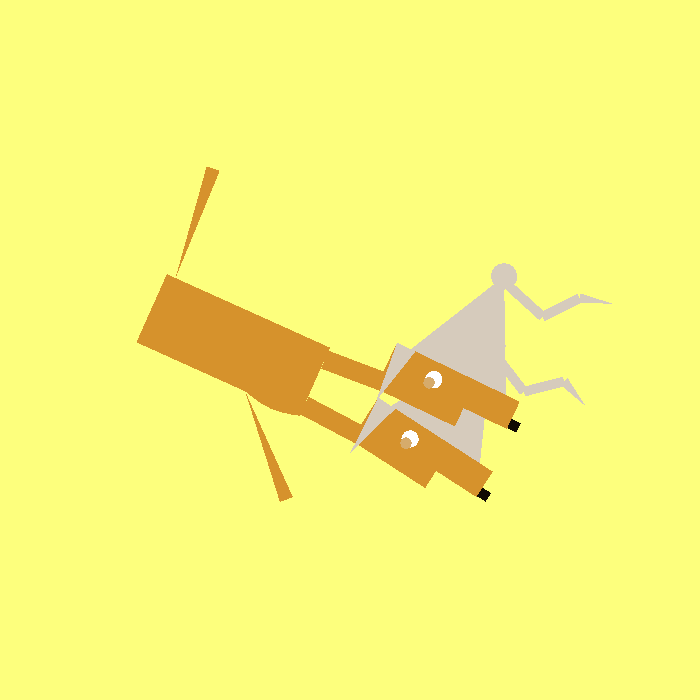
A "Horse" from HorseyGame with 2 tails, 2 heads,
no legs, and a cool party hat? I wonder how
this horse moves.

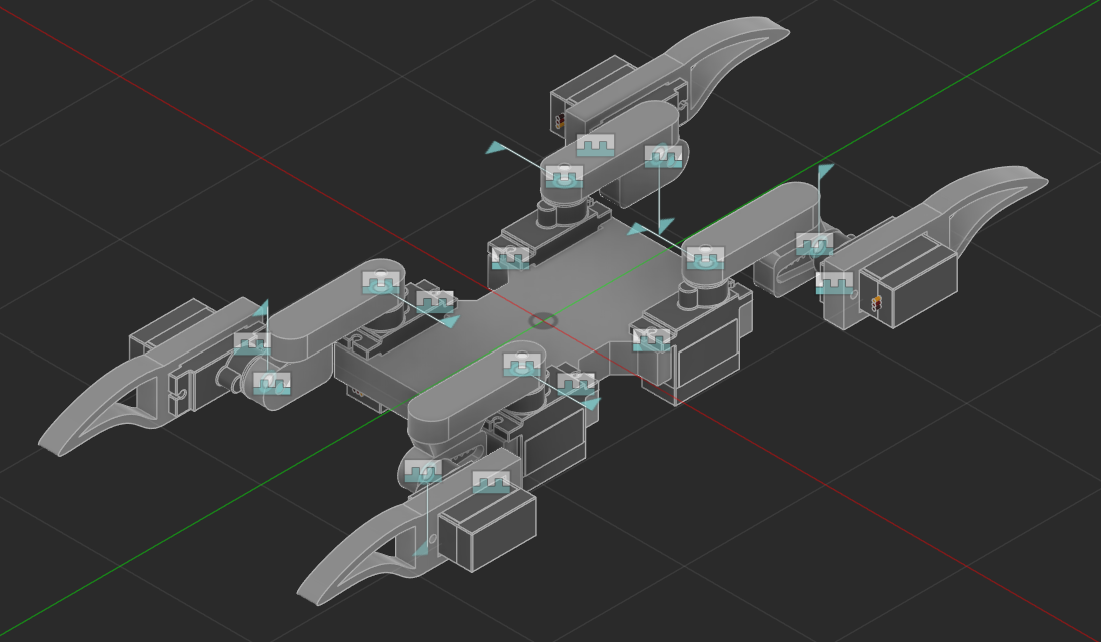
The rigged up tetrapod bot in Fusion
Walking Robots (Tetrapod & HorseyBot)

I'm experimenting with training robots for locomotion in IsaacSim/IssacLab
Tetrapod was my first project idea, I made a custom model and rigged it
in Fusion360. I used fusion2urdf to get a .xacro file, then converted that to
urdf. I ran into issues with small parts having their intertia round to zero, which caused
a lot of issues within IssacSim, so I decided to move onto a simpler HorseyBot to
figure out the IssacSim/IssacLab workflow before returning to complete Tetrapod

HorseyBot is inspired by HorseyGame (by Justin Smith) in where randomly generated
horses race each other. Due to the horses randomly generated body parts and unique traits
essentially you need to get a lucky combination of physical attributes + behavior to get
a horse that moves quickly. Many times the fastest horses are have extremely weird
features, exploiting weird quirks of the games physics system to move quickly.

HorseyBot takes this idea of having unintuitive physical features, and trying to find a behavioral
solution to find a method of efficient locomotion. I designed the model in <5 minutes, making
the body and legs very dispoportunate in size and having the legs located in weird locations.
The idea is to bring this HorseyBot into IssacSim/Lab and see what a sort of odd behavior it will
learn to do to enable it to walk.

I'm currently working on the training script for IssacLab.
Past Projects
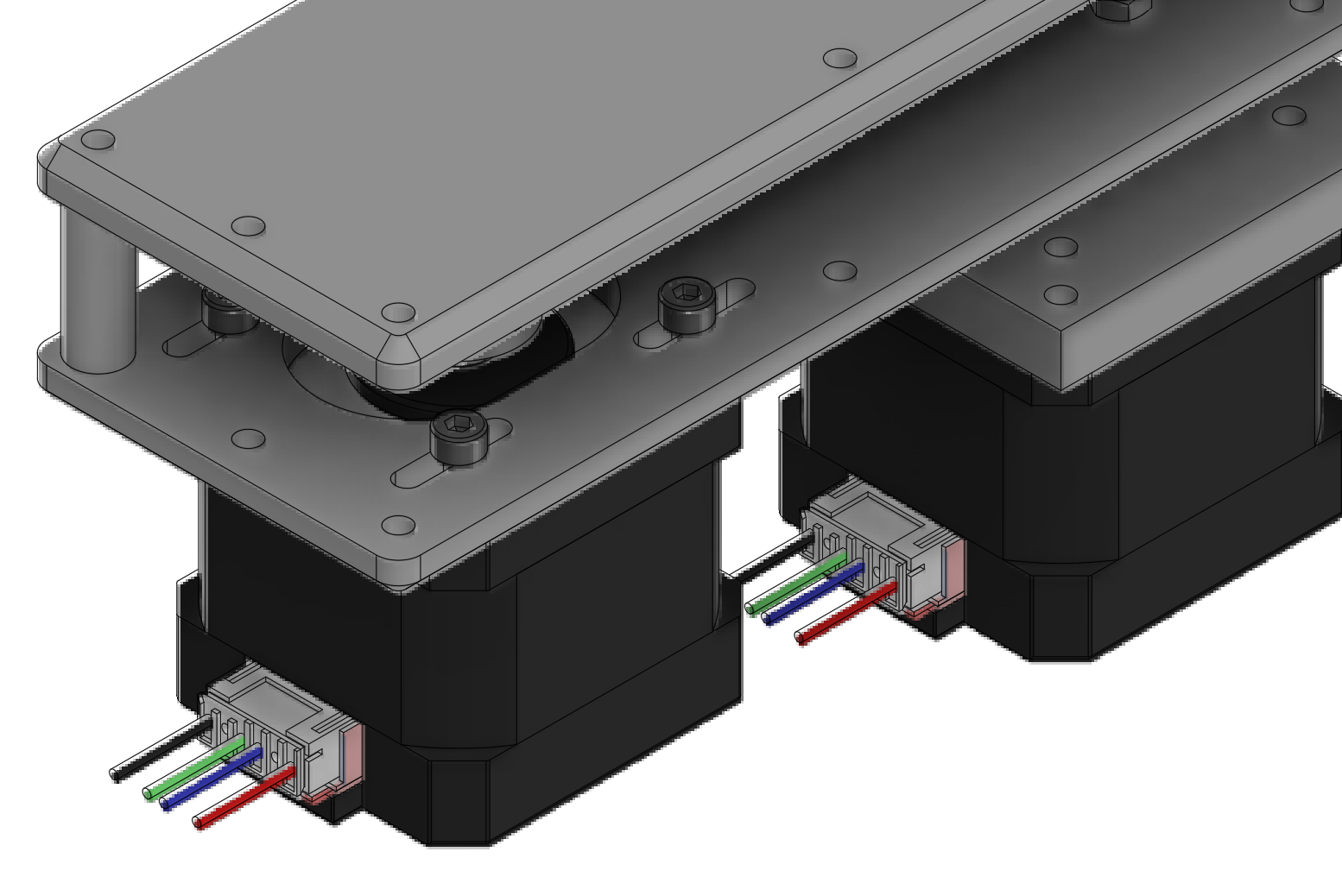
Adjustable motor mounting for easy belt tensioning
SCARA Arm

I made this arm as a fun little project to learn about Stepper Motors, Inverse Kinematic, 
and ROS2.

The arm runs off an ESP32 with custom firmware. I used two NEMA17 Steppers
 running on Big Tree Tech TMC2209 motor drivers.

The CAD design made in Autodesk Fusion, everything was printed from
PLA+.

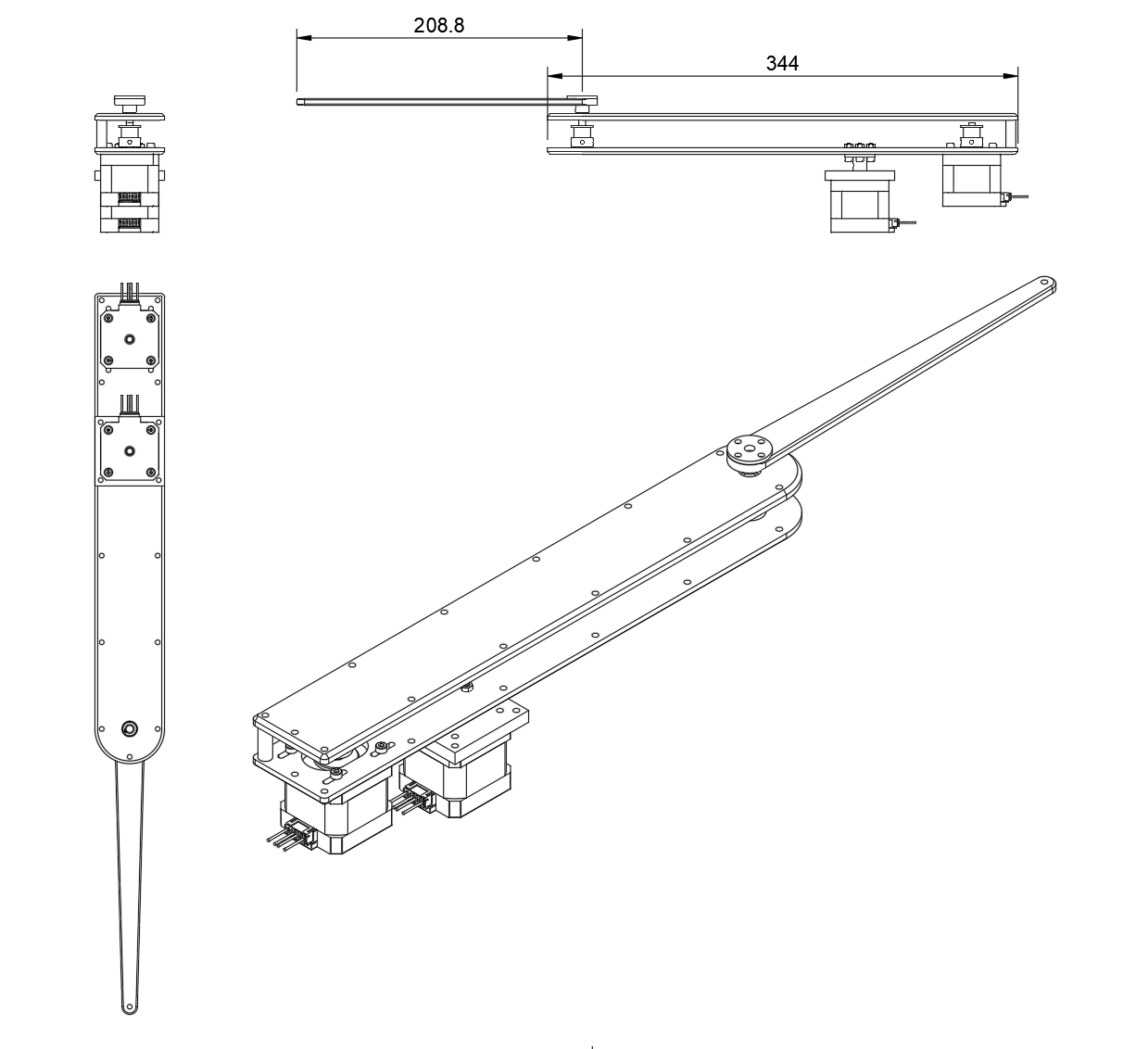
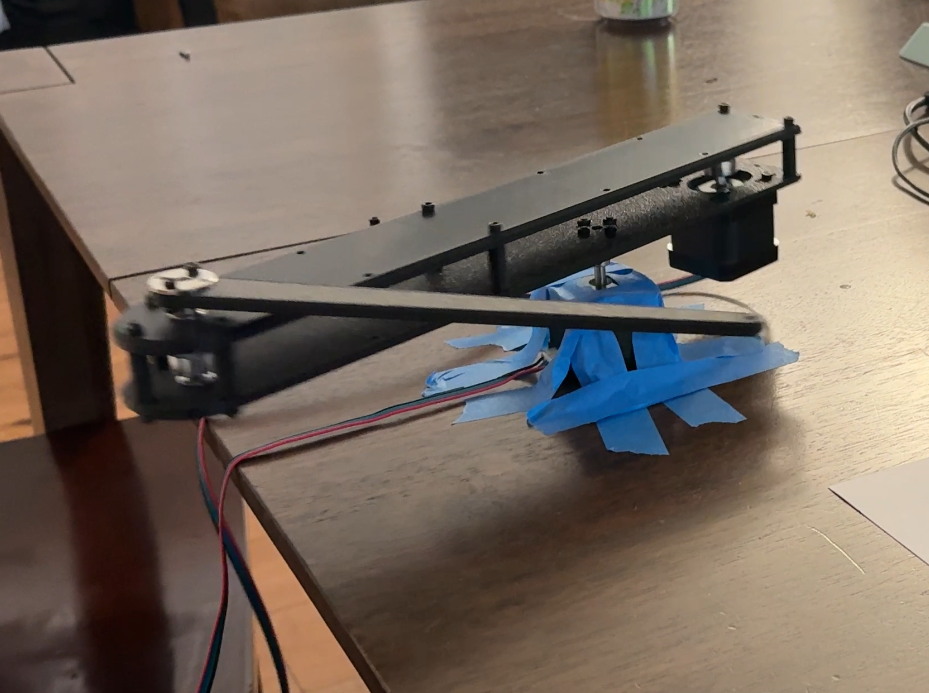
The design consists of two stepper motors mounted near the base, the second link is driven by a belt to reduce the amount of torque along the x and y axis, since if you were to mount the motor at the base of the 2nd link, the weight would produce a substantial amount of torque onto the first motors mount.

ROS2:
This project was mainly learning how to use ROS2, I had my pygame publishing to a topic the coordinates, my second node subscribed to that topic, would take those published coordinates, using IK find a tuple of angles to send over to the ESP32.
I would send those angles over serial via USB to the ESP32, where my firmware would then execute to move to those goal angles.

This entire system was open loop, so no encoders / feedback
Actual build, taped down to my desk lol
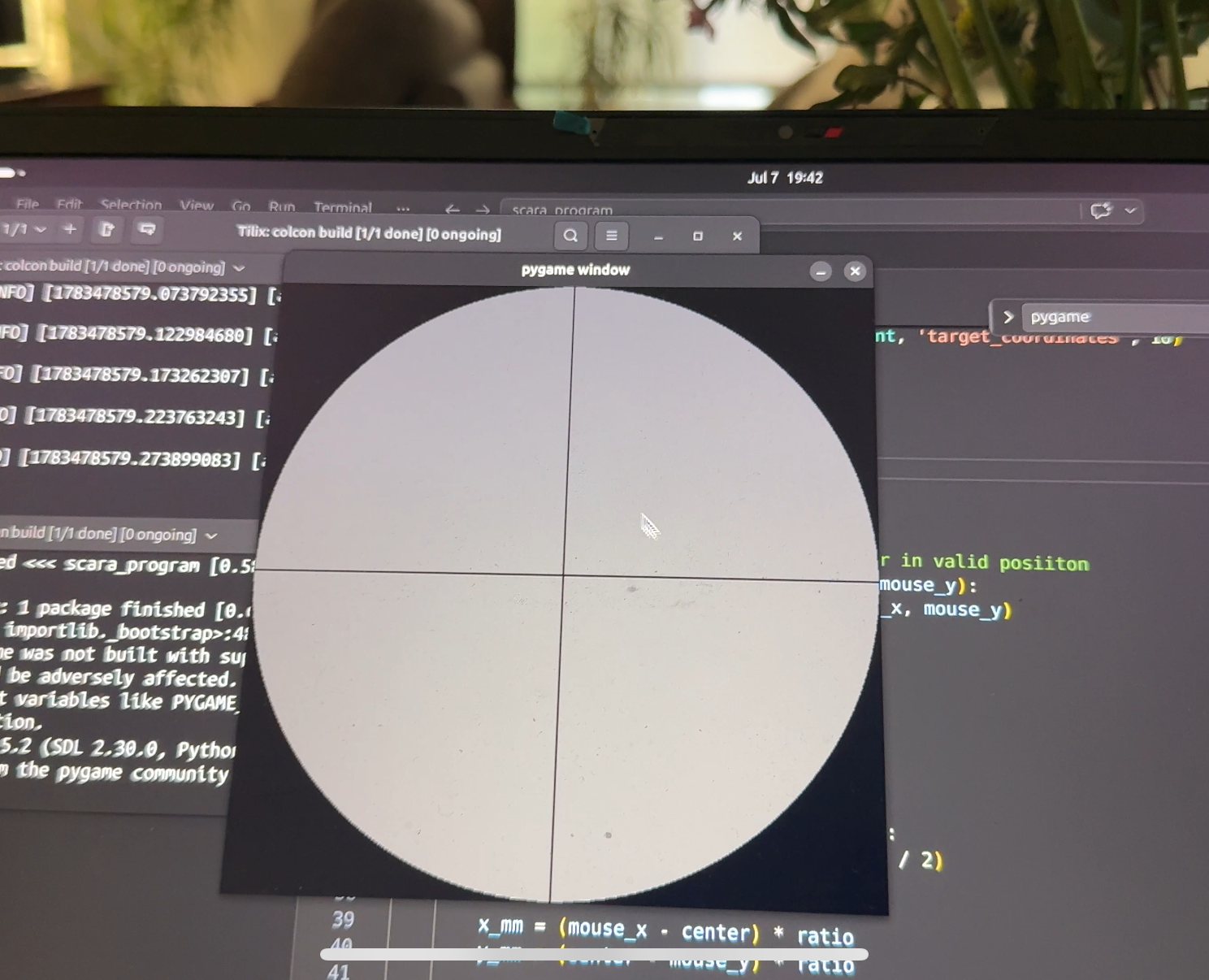
Test UI to control the arm, the arms endifactor follows the
cursor anywhere within the circle. It updates in real time

The UI was done in python using pygame
Interactive Bouncing Ball Installation

This was done for an Instructible challenge where it won 1st place!

This project took around 4 days from start to finish.
I wrote a detailed description on the instrucbatlves page, go check it out
here: https://www.instructables.com/Interactive-Bouncing-Ball-Installation/,
also check out my youtube video here on the left!

BattleBot

This BattleBot was made with a friend (who now goes to UCSD for CS/AI) for our
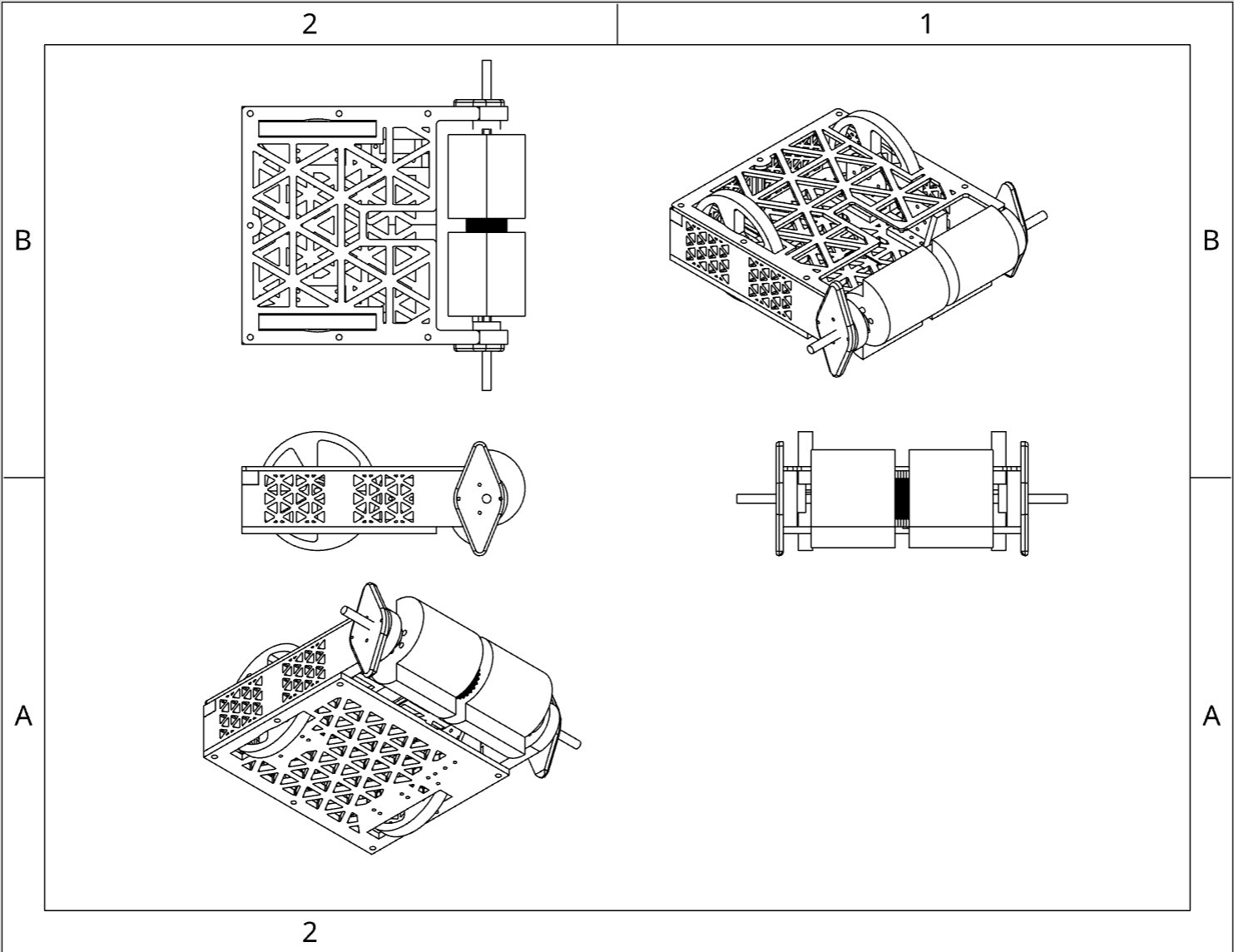
high schools BattleBot club. The final weight came to around 3LB, housing was
fully 3D printed as the rules banned any metal frames.

My friend naturally took on the CS side of the project, while I took on the design/
manufacturing process.

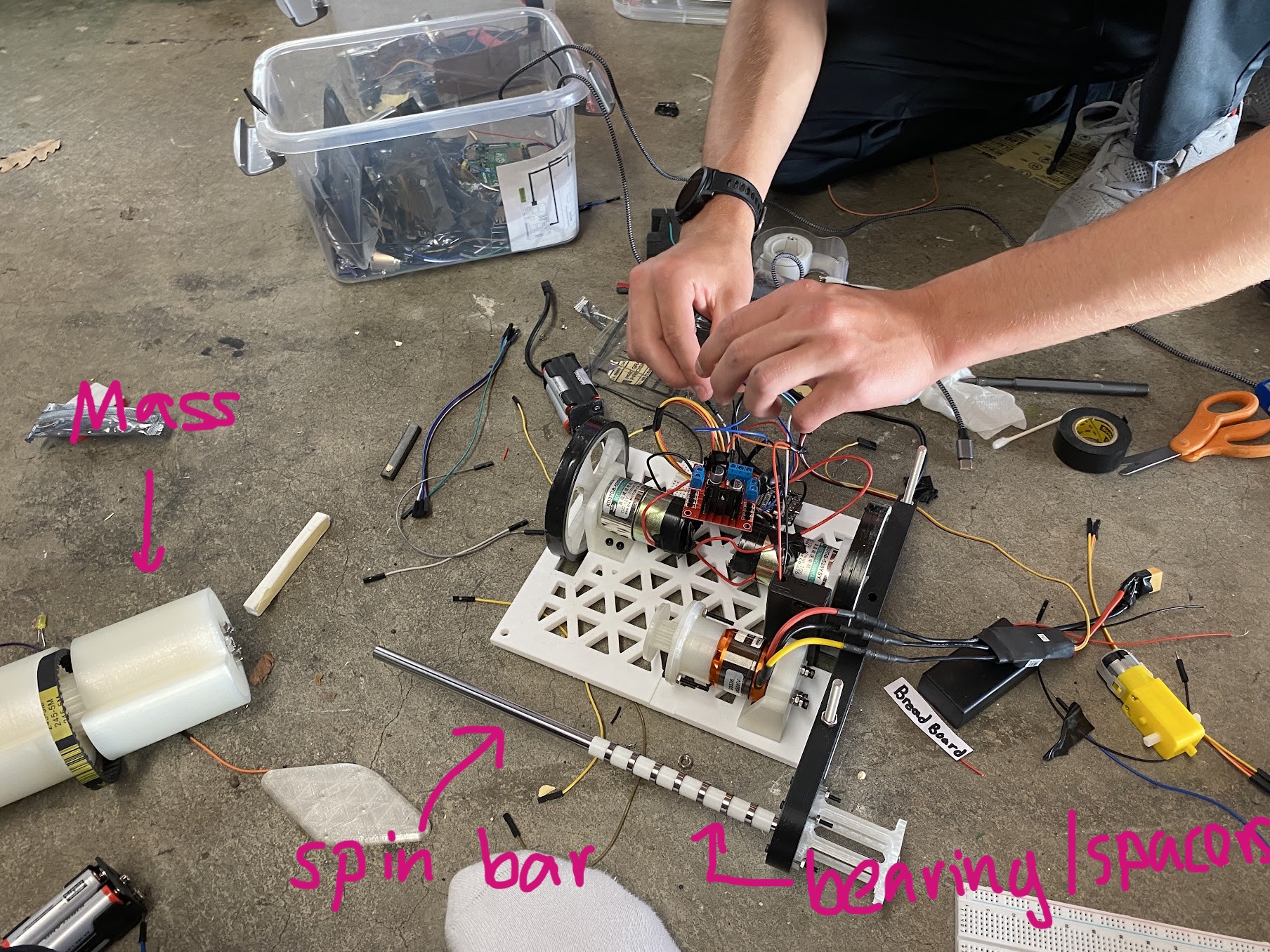
The weapon used a spinning mass belted to a brushless DC Motor, I purposely made
the belt a bit loose so that when the spinning mass would impact something, that force
wouldn't get driven into the motor, rather it would cause the belt to slip instead, I was
quite proud of coming up with that system at the time.

The weapon is mounted onto a 12mm hardened steel shaft, with these neat ultrathin
bearings spaced apart by 3D printed spacers.
Concrete Products

I made a collection of concrete products for my portfolio for AP ART3D

It was quite fun to learn so much about concrete, all the different types,
properties, method of mixing, different slumps, methods of finishing
concrete.

I ended up using quickrete for most of my projects (yes i know, quickretes cerement,
not concrete), i ended up using quickrete for its fast casting time and gauretee smooth
finish since its cement.

I made 16 products over the year, (one every 2 weeks), though I'd like to highlight
a few of the ones I like.

Everything was 100% custom design/made. Starting from the concept sketches,
to the CAD, to the manufacturing all done by me. It gave me a lot of confidence
doing the whole product design workflow from start to finish by the end of the
year.

Concrete Lamp (working!)
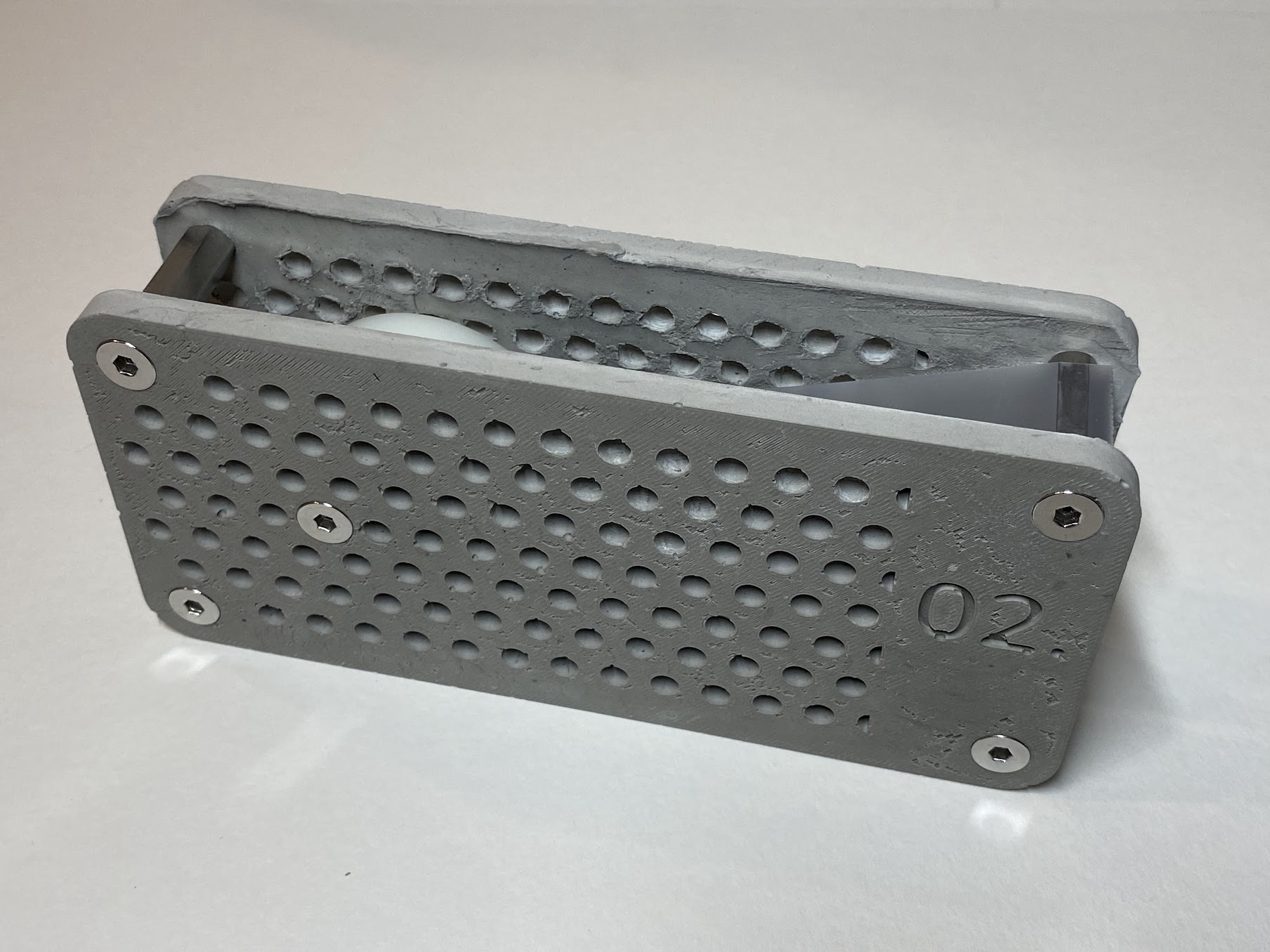
Concrete Tape Dispenser
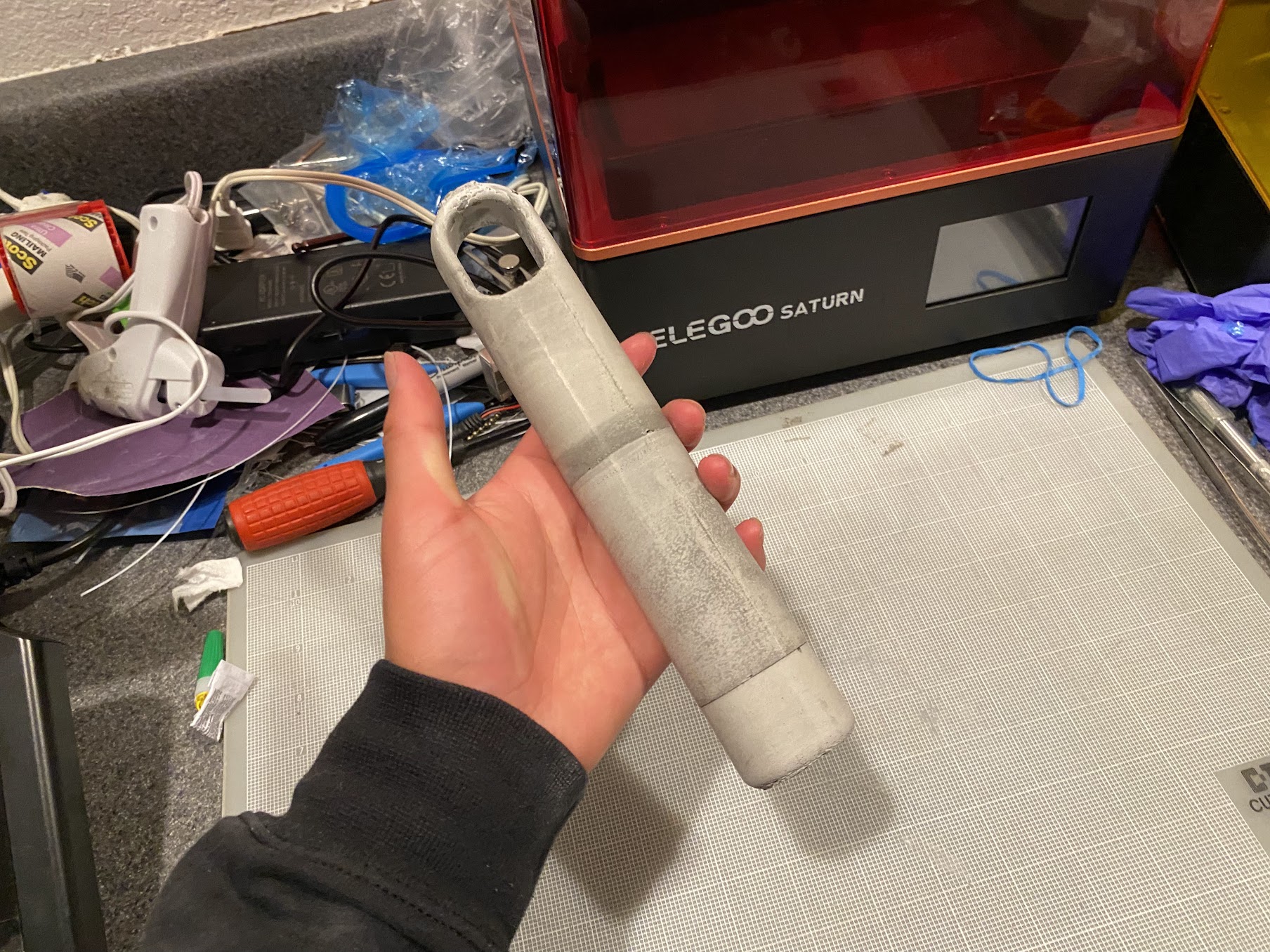
Concrete XACTO knife holder
Lid is held in place by neodymium magnets :)
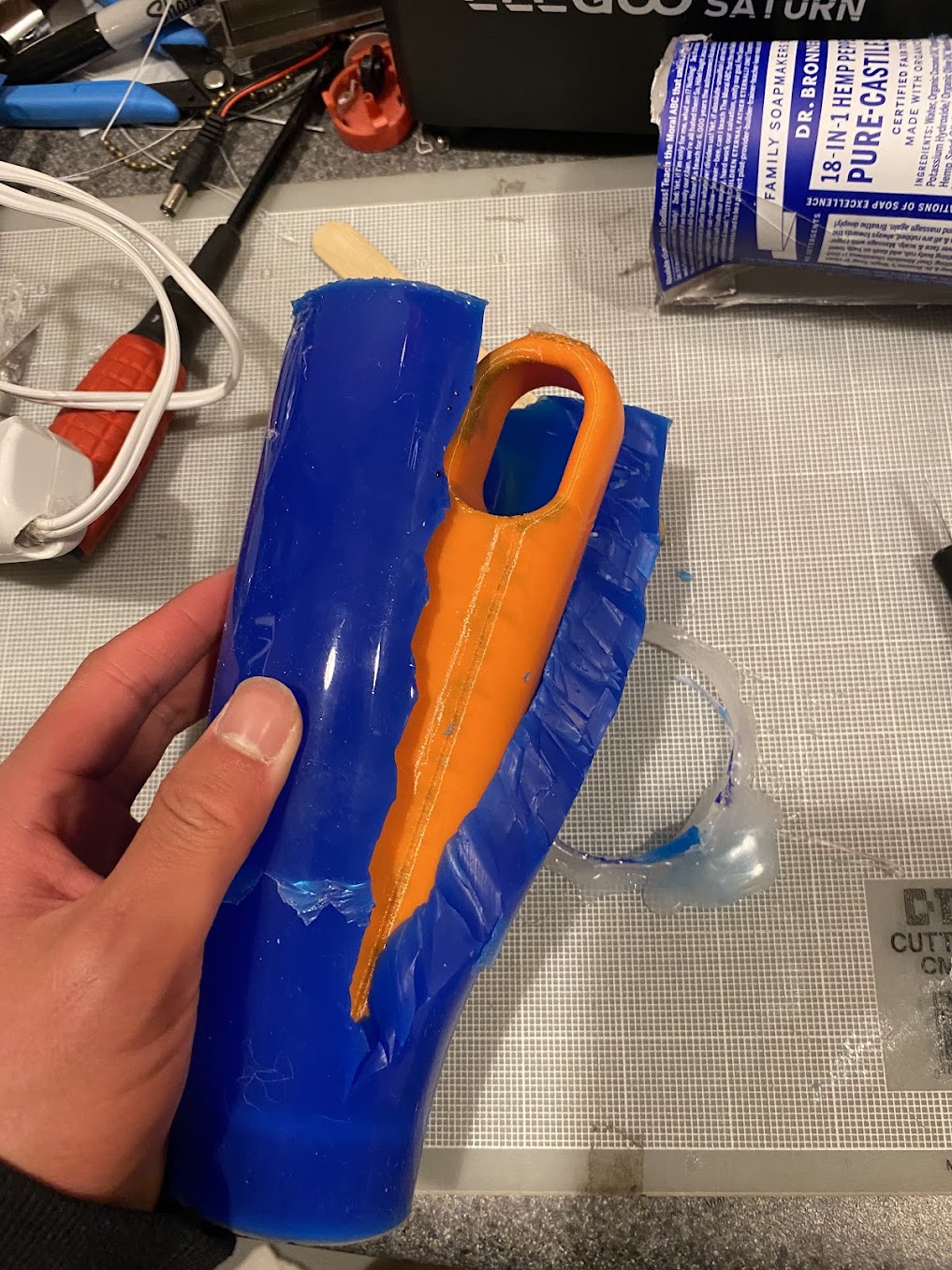
Casting the 3D positive to form silicone mold
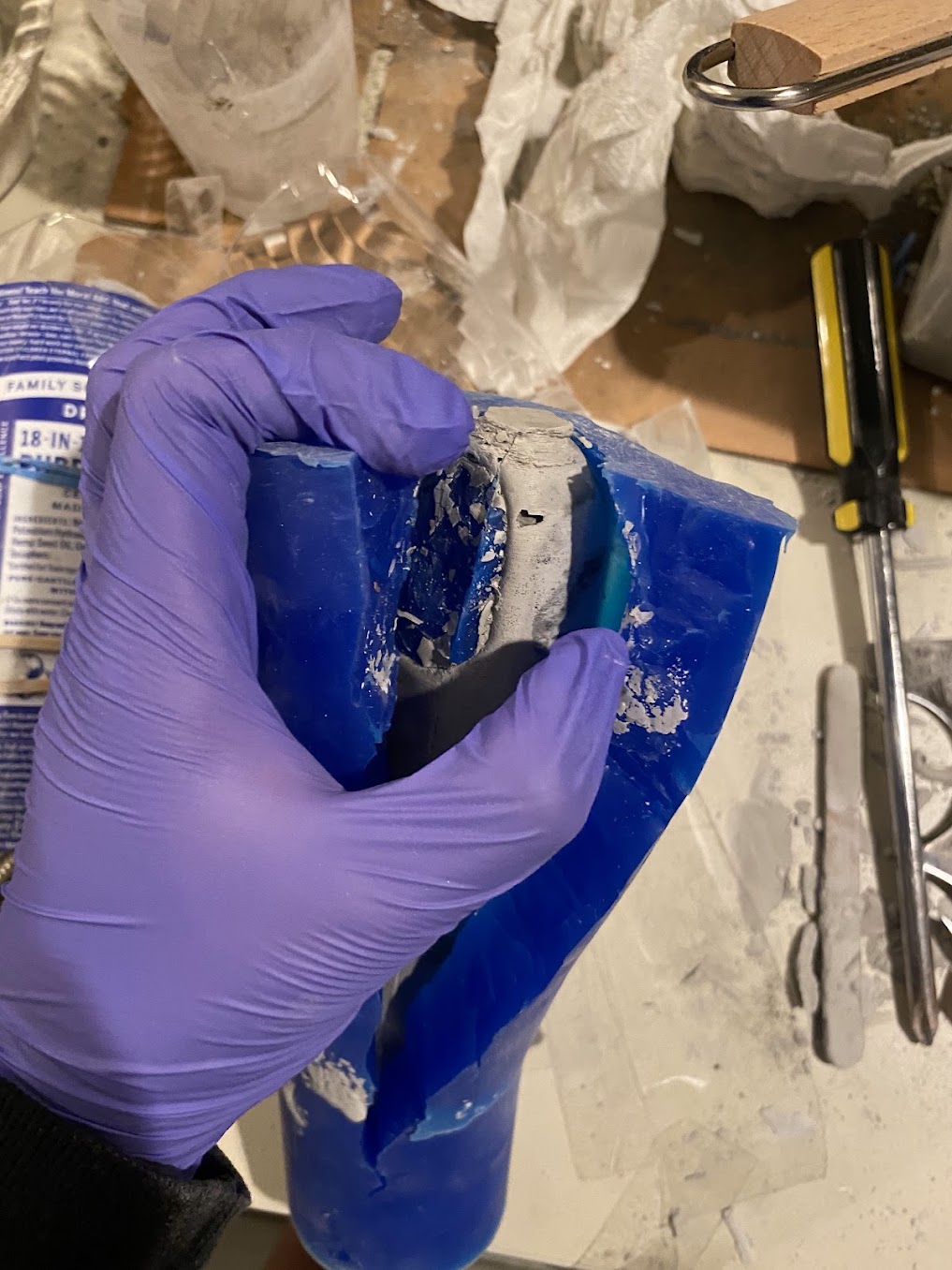
Removing concrete cast from mold
Other Random Design Projects

I've done various other design projects in CAD,
I've rendered a few for AP-ART 3D class again
so it's more presentable. 

The rendering was all done in Blender, it was quite
fun to learn how to get my CAD projects into blender,
took a bit of trail and error but the workflow I ended up
with is just assembling the entire CAD first, then exporting
as a .COLLADA which keeps all it's relative spacial properties,
then importing that .COLLADA into Blender.
Headphone design
text
website not done yet! TO BE CONTINUED :)